

As highlighted in the recent documentary, “CHAOS: the Mansion Murders” on Netflix, Charles Manson had documented interactions with the Haight-Ashbury Free Medical Clinic (HAFMC) in San Francisco during the late 1960s. This clinic was associated with researchers studying drug use and its effects on behavior, some of whom had ties to controversial CIA programs.
The Haight-Ashbury Free Medical Clinic
The clinic, founded by Dr. David Smith, provided free medical care to the community and also served as a center for research on drug use among the hippie population. Dr. David E. Smith was born in Bakersfield, California. Smith pursued medical studies at the University of California, San Francisco (UCSF), earning his M.D. in 1964.


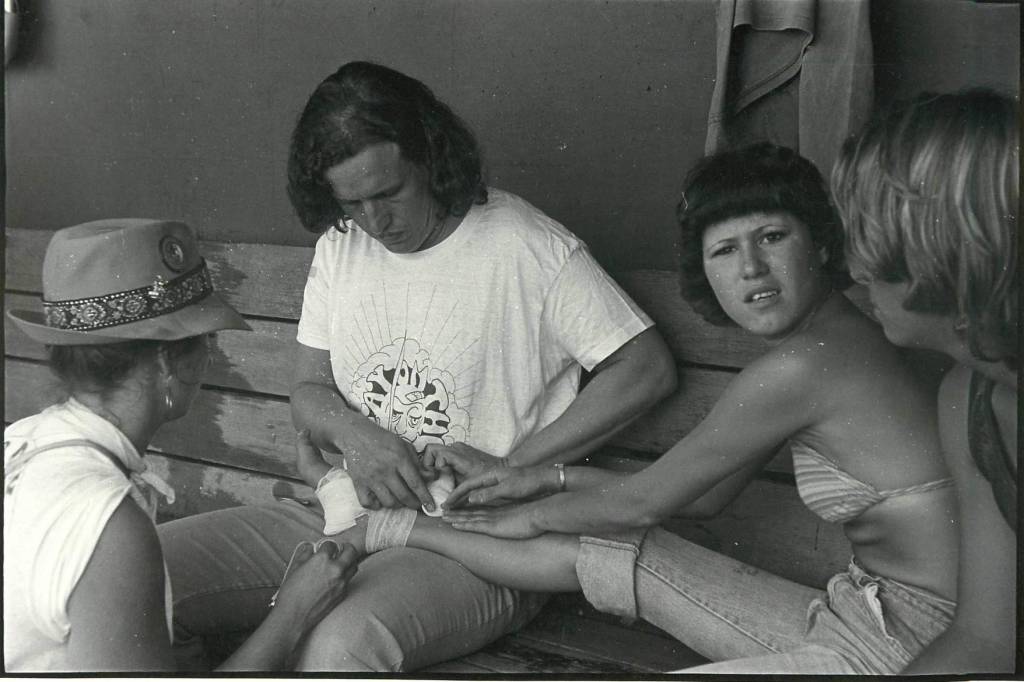
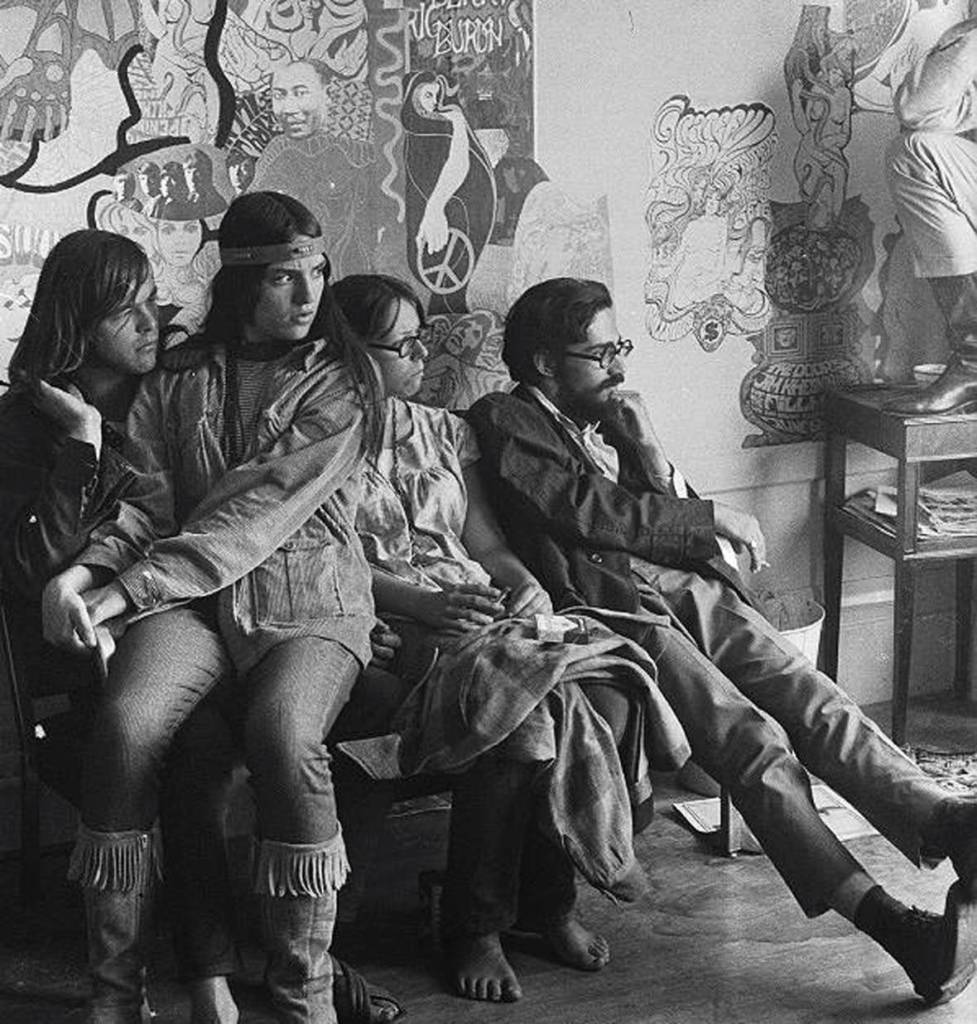
Research Activities at HAFM-Clinic
Dr. Smith and his colleagues also conducted studies on the effects of drugs like LSD and amphetamines. Notably, Dr. Louis “Jolly” West, a psychiatrist with known ties to the CIA’s MKUltra program, was involved in research at the clinic. MKUltra was a secret CIA project that aimed to develop mind-control techniques through the use of drugs, including LSD. (Read declassified MKUltra documents at the CIA reading room.)
Dr. West established a “laboratory disguised as a hippie crash pad” near the clinic to observe and study the effects of psychedelic drugs on the local youth.
Born on October 6, 1924, in Brooklyn, New York, to Russian-Jewish immigrant parents, West grew up in Madison, Wisconsin, under modest circumstances. He enlisted in the U.S. Army during World War II, which facilitated his medical education. West earned his M.D. from the University of Minnesota Medical School in 1949 and completed his psychiatric residency at the Payne Whitney Psychiatric Clinic of Cornell University in 1952.
At the age of 29, West became the youngest full professor and chair of psychiatry at the University of Oklahoma College of Medicine. In 1969, he was appointed chair of the Department of Psychiatry and director of the Neuropsychiatric Institute at the University of California, Los Angeles (UCLA), positions he held until 1989. His tenure at UCLA was marked by a multidisciplinary approach to psychiatry, integrating social sciences, neurobiology, and anthropology.
West’s work on brainwashing techniques during the Korean War drew the attention of the Central Intelligence Agency (CIA). He became a subcontractor for MKUltra, a clandestine CIA program focused on mind control and chemical interrogation methods. His research under this program included studies on hypnosis, suggestibility, and the effects of psychedelic drugs like LSD.
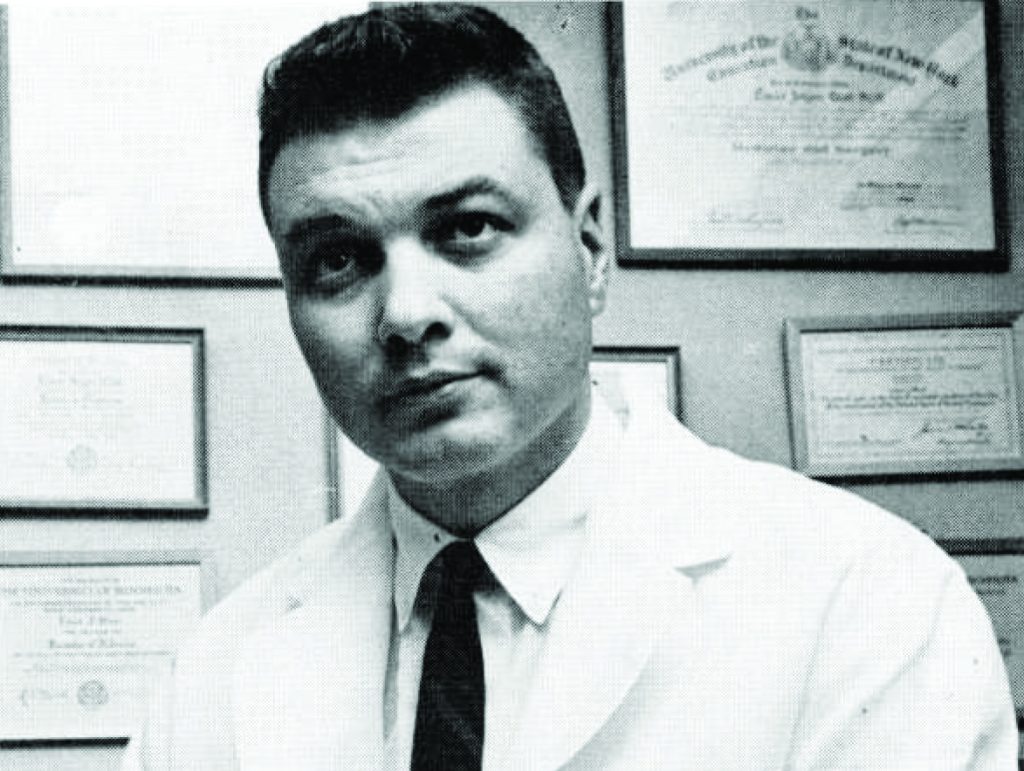
Studies West Was Involved In
LSD Experiment on an Elephant: In 1962, West and colleagues administered a substantial dose of LSD to Tusko, a male Asiatic elephant at the Oklahoma City Zoo, aiming to study musth. a periodic condition of heightened aggression in male elephants. The experiment resulted in the animal’s death within hours, sparking ethical debates and criticism regarding the methodology and oversight of such research.
Jack Ruby Evaluation: After Jack Ruby assassinated Lee Harvey Oswald, the accused assassin of President John F. Kennedy, West was appointed as Ruby’s psychiatrist. He diagnosed Ruby with psychosis and recommended further evaluation using methods like sodium thiopental (truth serum) and hypnosis, raising questions about the ethical implications of such techniques.
Patty Hearst Trial: West served as an expert witness in the 1976 trial of Patty Hearst, the newspaper heiress kidnapped by the Symbionese Liberation Army (SLA). He testified that Hearst exhibited signs of coercive persuasion and brainwashing, suggesting her involvement in criminal activities was under duress. Despite his testimony, Hearst was convicted, though her sentence was later commuted.
West’s career was not without controversy. His involvement in the CIA’s MKUltra program, which conducted experiments on unwitting subjects, has been a focal point of ethical criticism. The program’s use of drugs, hypnosis, and other methods on non-consenting individuals has been condemned as a violation of human rights.
At UCLA, West proposed establishing a Center for the Study and Reduction of Violence, aiming to research the biological and social factors contributing to violent behavior. Critics argued that the center’s proposed methods, including psychosurgery and behavior modification, could lead to unethical treatment of subjects, particularly marginalized communities. The proposal faced significant opposition and was ultimately shelved.
West was an outspoken critic of the Church of Scientology, labeling it a cult. In response, Scientologists allegedly attempted to discredit him and sought his dismissal from academic positions, reflecting the contentious relationship between West and the organization.
Dr. Louis Jolyon West’s contributions to psychiatry are multifaceted, encompassing pioneering research in brainwashing, drug effects, and cult behaviors. However, his involvement in ethically questionable research practices, particularly under the MKUltra program, and controversial experiments have left a complex legacy, prompting ongoing discussions about the ethical boundaries of scientific research.

Manson’s Time at the Clinic (1967-1968)
Manson arrived in San Francisco in March 1967, after being released from prison. He settled in the Haight-Ashbury district, where the clinic was located. Manson and his group, mainly young women, visited the clinic for medical treatment, particularly for sexually transmitted diseases.
By 1968, Manson left Haight-Ashbury and moved his followers to Spahn Ranch in Southern California, but his experiences in San Francisco, including exposure to drug culture, psychological manipulation, and alternative medicine, contributed to the development of his commune-style “Family”.
Manson repeatedly violated his parole, engaging in crimes that should have sent him back to prison, including drug offenses, sexual exploitation, and crossing state lines illegally. Yet, instead of being incarcerated, Manson was often redirected to the Haight-Ashbury Free Medical Clinic.
This pattern is highly peculiar, as parole violators, especially repeat offenders like Manson, were rarely given such leniency. It raises questions about why he was spared from harsher consequences. Was he simply lucky, or was there an unspoken interest in studying him as a case subject? Given the clinic’s ties to figures like Dr. Jolly West some speculate that Manson may have been viewed as a subject rather than a criminal, an individual worth observing and experimenting with, rather than locking away.
Some have speculated that his ability to control his followers through LSD, isolation, and repetition may have been influenced by what he observed or experienced during his time in Haight-Ashbury’s research-heavy environment and time with West, and Manson’s recounts during his visits back at the clinic, may have been being observed by the researchers.
Charles Manson’s interactions with the Haight-Ashbury Free Medical Clinic (HAFMC) in 1967-68, combined with the psychological and drug studies being conducted in the area, may have played a significant role in shaping his cult leader persona. While there is no direct proof that he was an official subject of research, the environment of LSD experimentation, mind-control studies, and psychological observation may have influenced his techniques for manipulation and control.
Manson, already skilled in manipulation, may have absorbed knowledge from researchers or patients about how LSD and amphetamines affected cognition and used this knowledge to control his followers. He may have been openly allowed this absorption for the sake of West and his studies.
Dr. David Smith, the clinic’s founder, acknowledged that Manson was a skilled manipulator who understood group psychology and used it to build his cult. He learned what types of people were most vulnerable to manipulation (runaways, addicts, those seeking purpose). He developed techniques like love-bombing, isolation, and group reinforcement to create dependency among his followers.
He mimicked authority figures he observed, positioning himself as a spiritual leader and father figure. He experimented with repetition, isolation, and ritualistic behaviors, common mind-control tactics. He used LSD in “guided trips” to program his followers into believing he was a prophetic figure.
Through the clinic’s study, Manson learned how different drugs influenced behavior, possibly through conversations with researchers or observing patients. He became skilled in mixing substances to create desired mental states, helping him break down resistance and reinforce cult dependency.
He carefully controlled when and how his followers took LSD. He used drug-induced states to reinforce his ideology, making his followers more suggestible. He withheld drugs as a form of punishment and control, creating dependency.
The hippie movement emphasized communal living, free love, and spiritual exploration; all things Manson later exploited. The HAFMC treated groups of hippies, observed group behavior, and studied social influence. Manson studied the way groups bonded, which influenced his creation of the “Manson Family”.
He structured his cult like a hippie commune but with strict internal hierarchies. He used communal reinforcement (group LSD trips, group sex, shared ideology) to create loyalty. He encouraged a shared enemy mentality (society, the establishment, law enforcement), a tactic often observed in counterculture movements.
He isolated them from the world. They had no electricity, no television, no access to newspapers or the world outside of Manson’s Ranch. During Manson’s parole violation visits to the clinic, being an ego-maniac, he was allegedly known to openly brag about how he was able to get the members to do his bidding as his doctor simply took notes.
This speaks to the maniacle deviance of the CIA to observe a situation which was obviously becoming increasingly dangerous, and they chose to study it instead of stop it.
While there is no official evidence that Manson was an MKUltra test subject, his time in Haight-Ashbury exposed him to cutting-edge psychological research on drugs, group behavior, and mental conditioning. The clinic may not have created Manson, but it provided him with an unintentional education in mind control, psychology, and drug-based influence, all of which became the foundation of the Manson Family’s cult structure.

COINTELPRO and Operation CHAOS
Further into Dr. West’s history, some theories suggest that his research into mind control and drug effects may have indirectly influenced tactics used in COINTELPRO and Operation CHAOS.
COINTELPRO (Counter Intelligence Program) and Operation CHAOS were covert programs initiated by the Federal Bureau of Investigation (FBI) and the Central Intelligence Agency (CIA), respectively, during the mid-20th century. Both aimed to monitor, infiltrate, and disrupt domestic political organizations perceived as threats to national security.
COINTELPRO was a series of covert and often illegal activities conducted by the FBI from 1956 to 1971. Its primary objective was to surveil, infiltrate, discredit, and disrupt domestic political organizations deemed subversive. Targets included civil rights organizations, feminist groups, socialist entities, and various activist movements.
Key Aspects of COINTELPRO
The FBI employed informants and undercover agents to monitor and infiltrate target organizations. These operatives gathered intelligence and, in some cases, actively worked to undermine the groups from within. Tactics included spreading false information, forging documents, and planting misleading news items to discredit organizations and sow discord among members. The FBI used the legal system to intimidate activists, including frequent arrests on spurious charges, excessive surveillance, and other forms of legal harassment. There were instances of violence and assassination attributed to COINTELPRO, notably the killing of Black Panther leader Fred Hampton in 1969.
Notable Targets
Martin Luther King Jr. was subjected to extensive surveillance and harassment in an effort to undermine his leadership and personal life. The FBI aimed to neutralize the Black Panther Party by targeting its leaders and disrupting its community programs. Organizations advocating for socialist ideologies or opposing the Vietnam War were also targeted.
The existence of COINTELPRO was revealed in 1971 after activists broke into an FBI office in Media, Pennsylvania, and exposed documents detailing the program. Subsequent investigations, including the Church Committee hearings, condemned the FBI’s actions as abuses of power incompatible with democratic principles.
Operation CHAOS: CIA’s Domestic Espionage Effort
Operation CHAOS was a covert program initiated by the CIA in 1967 under President Lyndon B. Johnson and expanded under President Richard Nixon. Its mission was to uncover possible foreign influence on domestic protest movements, particularly those opposing the Vietnam War. The operation continued until 1974.
Key Aspects of Operation CHAOS
Despite the CIA’s mandate restricting operations to foreign intelligence, Operation CHAOS involved extensive surveillance of American citizens and organizations. The program compiled files on approximately 7,200 Americans and indexed over 300,000 names in a computer database. CIA operatives infiltrated anti-war groups and other organizations to gather intelligence on potential foreign connections. The CIA collaborated with the FBI and local law enforcement, sharing intelligence and resources.
Notable Targets
Individuals and groups protesting the Vietnam War were primary targets, including Students for a Democratic Society (SDS) and the Black Panther Party. Groups advocating for civil rights and social justice were also monitored for potential foreign influence.
Operation CHAOS was exposed in 1974 by journalist Seymour Hersh, leading to public outcry and the establishment of investigative bodies like the Church Committee. These investigations concluded that the CIA’s domestic surveillance activities were illegal and violated the agency’s charter.
Consequences and Legacy
The revelations of COINTELPRO and Operation CHAOS led to widespread criticism of government overreach and the violation of civil liberties. In response, reforms were implemented to increase oversight of intelligence agencies, including the establishment of permanent congressional committees to monitor their activities.
Despite these reforms, the legacy of these programs continues to influence public distrust of government surveillance and has been cited in discussions about the balance between national security and individual rights.
The connections between Dr. Jolly West, the Haight-Ashbury Free Medical Clinic, Charles Manson, and the broader counterintelligence programs of the 20th century form a disturbing web that underscores the lengths to which those in power have gone to study, manipulate, and control human behavior. While no direct evidence conclusively proves that Manson was an experiment of the CIA or FBI, the circumstantial ties raise serious ethical and historical questions about the role of government-backed psychological research in shaping the counterculture, and ultimately, the cult era of the 1970s.
Manson’s ability to turn a group of idealistic young people into murderers did not occur in a vacuum. He understood mind control, and he utilized the same techniques being explored by intelligence agencies in the 1960s; tactics that included LSD-induced mental breakdowns, group reinforcement, and the destruction of individuality. Whether he learned these tactics by accident, observation, or intention is a matter of speculation, but what remains undeniable is that the Manson murders marked the beginning of a dark new era; an era where cult leaders like Jim Jones, David Koresh, Sam Fife, and Charles “Heaven’s Gate” Applewhite would rise, each employing eerily similar psychological conditioning techniques on their followers.
As COINTELPRO and Operation CHAOS worked to disrupt and discredit political movements, the social chaos that followed provided the perfect conditions for authoritarian figures to fill the void left by fractured communities. While the FBI and CIA were busy neutralizing leftist activists, civil rights leaders, and anti-war demonstrators, Manson and others like him ran unchecked, recruiting and brainwashing their own followers into ideological armies. Some have speculated that this was no accident; that fostering fear and chaos among the public helped justify the very surveillance programs that intelligence agencies were carrying out in secret.
A Lesson in Mind Control
Today, as declassified documents continue to emerge, we must ask ourselves: how much of our history has been orchestrated by unseen hands? If figures like Dr. Jolly West were deeply involved in researching how to fracture the human psyche, how many other psychological experiments were carried out under the guise of protecting “national security”? And how much of what we consider random cultural shifts, from the cult era to modern mass surveillance, has been carefully engineered for control?
It is not conspiracy but fact that intelligence agencies have infiltrated social movements, experimented on unwitting citizens, and manipulated public perception for decades. Whether or not Charles Manson himself was part of such an experiment, he stands as a case study of what happens when psychological manipulation, unchecked power, and a fractured society converge.
If history has shown us anything, it is that the truth is often buried beneath layers of deception, classified files, and rewritten narratives. The challenge, then, is to question the official stories, recognize the warning signs, and remain vigilant against the forces that seek to manipulate minds and movements for their own agendas.
The past is a blueprint. And if we fail to understand the tactics used to control populations before, we leave ourselves vulnerable to the same cycles of deception, division, and destruction in the future.


If you found this article valuable, consider making a one-time contribution or establishing a monthly donation and support Vennie Kocsis.
Discover more from Vennie Kocsis
Subscribe to get the latest posts sent to your email.


 Vennie Kocsis
One thought on “Exploring the CIA’s Influence on Charles Manson’s Manipulation Tactics”